
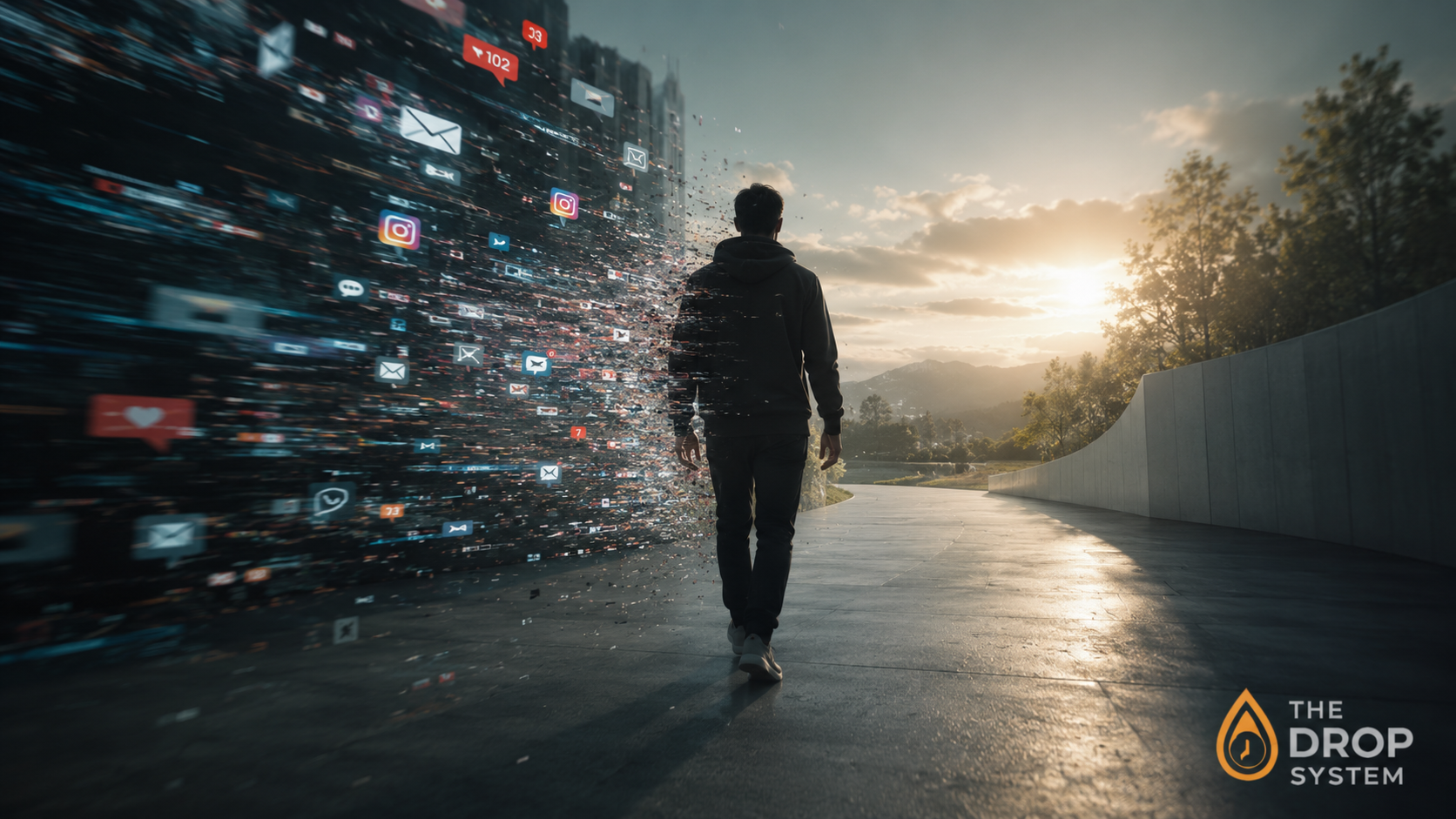
For a long time, productivity was mostly about managing time.
Calendars.
To-do lists.
Schedules.
Efficiency.
But the environment has changed.
The modern problem is no longer just:
“How do I manage my time?”
Increasingly, it is:
“How do I protect my attention?”
Because attention now sits underneath almost everything:
- focus
- relationships
- creativity
- emotional regulation
- learning
- parenting
- decision-making
- rest
And for many people, attention is being pulled apart continuously without them fully recognising it.
That changes the entire conversation.
Why this matters now more than ever
Human attention has become one of the most competed-for resources in modern life.
Technology companies compete for it.
Media competes for it.
Advertising competes for it.
Algorithms compete for it.
Notifications compete for it.
Every platform benefits when engagement increases.
Which means modern environments are increasingly built to:
- hold attention
- prolong stimulation
- encourage return behaviour
- reduce disengagement
Again, this is not conspiracy thinking.
It is incentive design.
And most people are navigating that environment with very little awareness of what it is doing to them cognitively over time.
The hidden shift: attention is becoming more valuable than time
You can technically have time available while remaining cognitively fragmented.
That is becoming increasingly common.
Many people now have:
- evenings free
- weekends available
- opportunities to rest
…but still feel:
- mentally scattered
- unable to focus
- emotionally overstimulated
- cognitively exhausted
Why?
Because available time is no longer enough if attention itself is continuously fractured.
This is why attention management is becoming more important than traditional time management alone.
Without stable attention:
- planning collapses
- focus weakens
- relationships become partial
- rest becomes shallow
- creativity disappears into noise
Why modern productivity advice increasingly feels incomplete
A lot of classic productivity advice assumes:
- focus is available
- interruption is manageable
- deep work is normal
- stimulation levels are relatively stable
For many people, none of that is true anymore.
Modern environments create:
- constant novelty
- continuous switching
- rapid stimulation cycles
- persistent cognitive demand
That means systems built purely around scheduling often struggle to hold.
Because fragmented attention undermines the entire structure underneath them.
Why this extends far beyond work
This is not only about productivity.
It affects:
- how parents relate to children
- how partners communicate
- how people experience rest
- how emotions are processed
- how deeply people think
- how much presence exists in daily life
Many people are physically present but cognitively elsewhere most of the time.
Phone nearby.
Attention partially divided.
Mind anticipating the next input.
That has emotional consequences, not just productivity consequences.
If this is resonating, you’ve got three options.
You can carry on reading and let it sit as awareness.
You can explore the books on Amazon and start applying the framework in your own way.
Or, if you want structured support to actually install this properly and make it stick, you can join the training.
The future divide may not be intelligence
Increasingly, the real divide may become:
Those who can protect attention.
And those who cannot.
Not because some people are naturally superior.
But because uninterrupted attention is becoming increasingly rare.
The ability to:
- think deeply
- stay present
- resist constant switching
- tolerate stillness
- focus without stimulation
…may become one of the defining advantages of the modern world.
Not only professionally.
Personally.
Emotionally.
Cognitively.
The DROP lens: attention protection as modern infrastructure
This is where the wider body of work now connects together.
DROP was never really just about squeezing more tasks into a day.
At its core, it was always about:
- reducing cognitive overload
- creating clarity
- lowering mental friction
- reclaiming intentional control
Attention simply sits underneath all of it.
Because:
- you cannot review clearly with fragmented attention
- you cannot plan properly while overstimulated
- you cannot think deeply while constantly interrupted
Which means protecting attention becomes foundational infrastructure for modern life itself.
Not a luxury.
Not a trend.
A necessity.
A realistic modern example
Imagine two people with the exact same number of hours available.
Person one:
- constant notifications
- endless context switching
- phone always nearby
- fragmented evenings
- stimulation from waking until sleep
Person two:
- protected focus windows
- intentional device boundaries
- quieter cognitive environment
- periods of genuine stillness
- fewer interruption points
Same amount of time.
Completely different quality of attention.
And over years, that difference compounds dramatically.
What will feel uncomfortable
Reclaiming attention often initially feels:
- slower
- quieter
- more emotionally exposed
- less stimulating
Many people notice urges to:
- check devices
- fill silence
- consume input constantly
That does not mean the process is failing.
It means the nervous system has adapted to high stimulation conditions.
And adaptation takes time to reverse.
Why this work is expanding beyond productivity
This is exactly why the wider work now includes:
- attention
- distraction
- silence
- parenting
- childhood cognitive development
- modern overstimulation
Because these are not separate conversations anymore.
They are all connected by one underlying issue:
What modern environments are doing to human attention.
And increasingly, people can feel that something is wrong even if they cannot fully articulate it yet.
Summary
Reclaiming your attention may become one of the most important skills of the next decade.
Because attention now shapes:
- focus
- relationships
- rest
- creativity
- emotional regulation
- presence
- depth of thought
Modern environments continuously compete for it.
Which means protecting it must become intentional.
Not perfectly.
But consciously.
Because the people who can protect depth inside a world built for distraction will increasingly operate differently from those who cannot.
If you want to explore this work further
These ideas connect deeply into the wider essays and long-form work around attention, modern life and cognitive recovery.
You can explore more at adamfoxofficial.com
Or explore the wider body of work on Amazon