
Be honest.
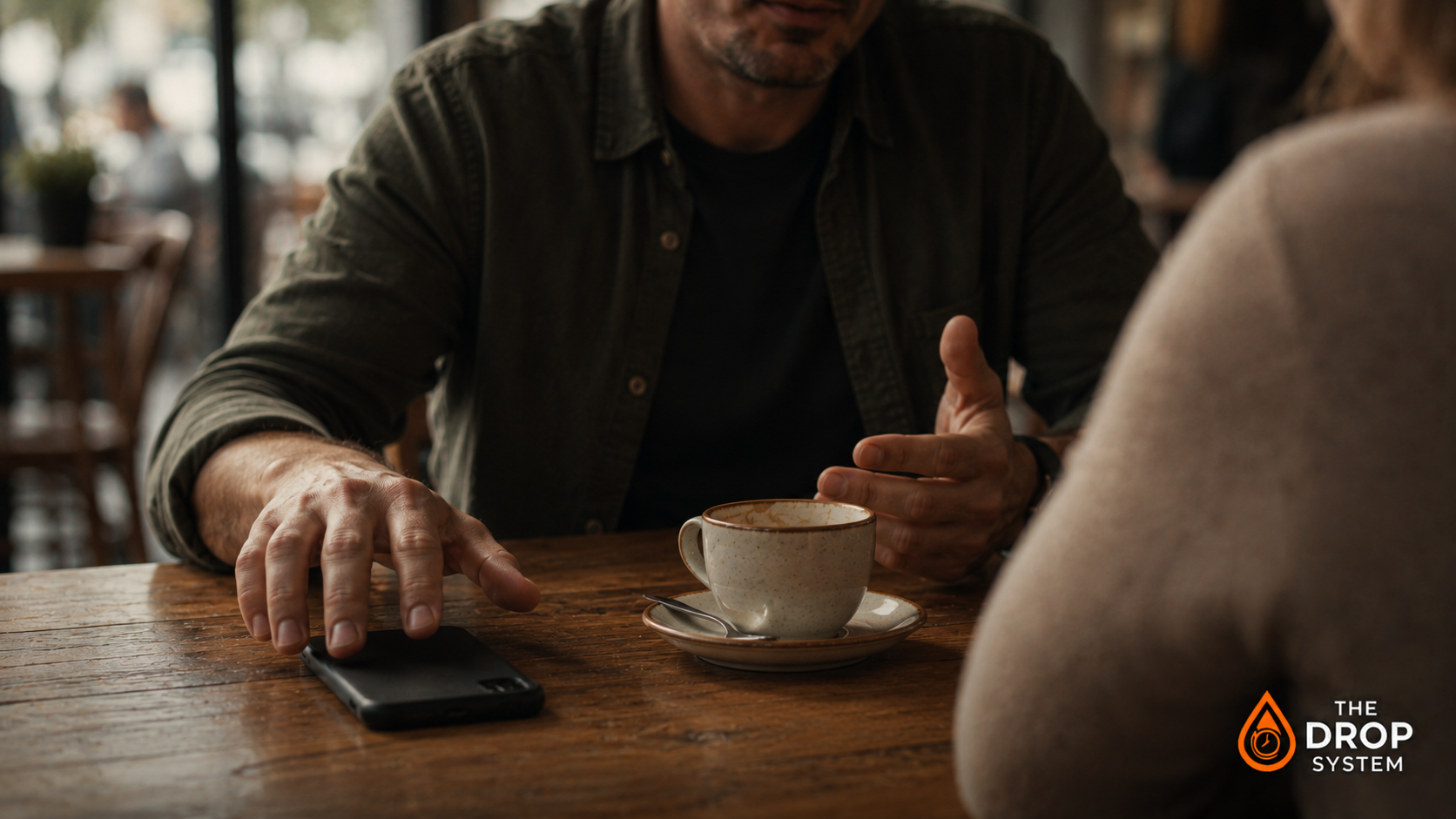
How many times have you picked up your phone today?
Not because it rang.
Not because somebody messaged you.
Not because you needed to do something.
Just… because.
You unlocked it.
Looked at the home screen.
Opened an app.
Closed it.
Then put it back down again.
Five minutes later, you did exactly the same thing.
Most people assume they’re checking their phone because they’re bored.
Or because they’re addicted.
Or because they lack willpower.
The truth is usually far more interesting than that.
You don’t check your phone because you’re weak.
You check it because your brain is doing exactly what it evolved to do.
The problem is that modern technology has learned how to exploit that wiring better than we understand it ourselves.
Your Brain Is Constantly Asking One Question
Every second of every day, your brain is trying to answer one simple question.
“Has anything changed?”
For most of human history, that question helped us survive.
Movement in the bushes could mean danger.
A change in weather could mean shelter.
A new food source could mean survival.
The people who noticed change survived more often than the people who didn’t.
So evolution rewarded brains that constantly scanned for new information.
Thousands of years later…
The bushes have become smartphones.
But your brain is still asking exactly the same question.
Has anything changed?
Any new messages?
Any new likes?
Any new emails?
Any new headlines?
Any new opportunities?
Any new problems?
Your phone promises it might have the answer.
The Power Of “Maybe”
If your phone guaranteed there was nothing new…
You probably wouldn’t check it very often.
But that’s not how it works.
There might be something.
Maybe your friend replied.
Maybe somebody commented.
Maybe your parcel has arrived.
Maybe there’s breaking news.
Maybe you’ve made a sale.
Maybe somebody needs you.
That tiny word…
Maybe…
Is incredibly powerful.
Because uncertainty keeps us curious.
And curiosity keeps us checking.
The Reward Isn’t The Notification
People often think they’re checking their phone because of the notification itself.
Not quite.
The reward actually arrives before that.
It arrives in anticipation.
Your brain starts imagining what might be waiting.
That anticipation releases dopamine.
Not because you’ve found something rewarding.
Because you’re expecting you might.
That’s an important distinction.
We’re often chasing possibility more than reward itself.
Which explains why so many people keep checking even when nothing interesting ever appears.
Small Checks Become Big Habits
Nobody consciously decides to check their phone 150 times a day.
It happens gradually.
A quick glance while making coffee.
Another while waiting for a lift.
Another after finishing an email.
Another before getting out of the car.
Each individual check feels insignificant.
But habits aren’t built from dramatic moments.
They’re built from repetition.
Eventually, your brain stops asking permission.
The trigger appears.
Your hand moves.
The phone unlocks.
Only afterwards do you decide what you’re actually looking for.
Every Check Solves A Tiny Problem
Here’s something most people never notice.
Checking your phone often relieves something.
Uncertainty.
Boredom.
Awkwardness.
Stress.
Loneliness.
Waiting.
Decision fatigue.
Your phone offers an immediate escape from almost every uncomfortable feeling.
The relief might only last a few seconds.
But your brain remembers it.
And next time that feeling appears…
It suggests the same solution.
Check your phone.
Again.
The Attention Economy Depends On This
Technology companies don’t need you to stay on your phone all day.
They simply need you to keep coming back.
Every return creates another opportunity.
Another advert.
Another video.
Another recommendation.
Another purchase.
Another minute of attention.
This isn’t about conspiracy.
It’s about incentives.
If attention creates revenue…
Products will naturally evolve to capture attention more effectively.
That’s exactly what has happened.
Why It Feels Like You’re Choosing
One of the cleverest aspects of modern technology is that it rarely feels forced.
Nobody makes you unlock your phone.
Nobody physically places it in your hand.
It feels like your own decision.
And technically…
It is.
But our decisions are shaped by environments.
If biscuits sit on the kitchen counter, you’ll probably eat more biscuits.
If your phone sits beside you all day promising novelty, you’ll probably check it more often.
Environment quietly shapes behaviour.
Far more than most people realise.
The DROP Lens: Notice The First Second
The DROP System stands for:
Dump
Review
Offload
Plan
Notice that Review comes before action.
That’s exactly what’s missing from most phone habits.
We react first.
Think later.
The simplest way to interrupt the cycle isn’t deleting every app.
It’s noticing the first second.
The exact moment your hand reaches for your phone.
Ask yourself one question.
“What am I hoping to find?”
Sometimes there’ll be a genuine answer.
Sometimes there won’t.
That tiny pause creates awareness.
And awareness creates choice.
Mid-Article Reality Check
This article isn’t suggesting smartphones are the enemy.
They’re remarkable tools.
Most of us couldn’t do our jobs without them.
The problem isn’t having a phone.
It’s allowing unconscious habits to decide when and why we use it.
That’s one of the central ideas behind The DROP Revolution.
Not rejecting technology.
Using it intentionally.
If you’re ready to take back more control over your attention, you can <a href=”https://amzn.to/4d3z7oU”>Buy the book</a> or <a href=”https://vllme8rwjgmxfhwzqavt.app.clientclub.net/courses/offers/1eaaf646-f41d-402a-af8c-a5be9ce1ccfc”>Join the DROP System training</a>.
Five Ways To Interrupt The Habit
The goal isn’t checking your phone less.
It’s checking it more deliberately.
Try this:
- Keep your phone out of sight while working.
- Wait ten seconds before unlocking it.
- Ask yourself what you’re looking for before opening an app.
- Leave your phone behind for one short activity each day.
- Notice the situations where checking feels almost automatic.
Don’t aim for perfection.
Aim for awareness.
Because awareness always comes before lasting change.
What Happens When You Stop Checking Constantly
At first…
Nothing.
Then something remarkable begins to happen.
Your thoughts become less fragmented.
Conversations become deeper.
Waiting becomes easier.
Books become easier to read.
Walks become more enjoyable.
Your mind starts feeling quieter.
Not because the world became less distracting.
Because you stopped responding to every invitation to be distracted.
That’s a very different thing.
Summary
The real reason you check your phone constantly isn’t because you lack discipline.
It’s because your brain evolved to seek novelty, reduce uncertainty and notice change.
Modern technology takes advantage of those perfectly normal human tendencies.
Understanding that doesn’t make you powerless.
It gives you somewhere to start.
Because once you understand why you’re reaching for your phone, you can begin choosing whether you actually need to.
If this article resonated with you, you may also want to read:
We No Longer Know How To Be Bored
Your Phone Is Training Your Attention Span
Why Your Brain Craves Constant Stimulation
The Psychological Cost of Infinite Scroll
Why Modern Life Feels So Noisy
How Notifications Quietly Control Your Behaviour
Why You Can’t Relax Without Your Phone Nearby
Together, these articles explain why our relationship with technology feels so automatic—and how you can begin taking control of it instead of allowing it to control you.
And if you’re ready to reclaim your attention and build a calmer, more intentional way of living, you can Buy the book or Join the DROP System training.